Several years ago, I set the goal of using the summer months to read either canonical southern literature or a new area of history outside of the Early Republic period. Between research projects and major life changes, I haven't done a great job of achieving my objective, but I've tackled William Faulkner, Flannery O'Connor, Walker … Continue reading Summer 2012 Reading
Footnotes, Chapter Endnotes, or Book Endnotes?
Which do you prefer? Just to make sure we're on the same page (pun intended), footnotes are citations at the bottom of pages; chapter endnotes are citations at the end of each chapter; and book endnotes are citations compiled at the end of the book, usually prior to the bibliography. Personally, I love footnotes. Being … Continue reading Footnotes, Chapter Endnotes, or Book Endnotes?
The Evolution of a Book, Part 5: Writing the Book
(The rest of this series is available at the following links: Part 1, Part 2, Part 3, and Part 4.) I had big plans when I wrote my book proposal in 2006. I even had a schedule that I posted in my office outlining how I would write one chapter each semester, starting in Fall 2007. If I could … Continue reading The Evolution of a Book, Part 5: Writing the Book
The Evolution of a Book, Part 4: Funding Your Research
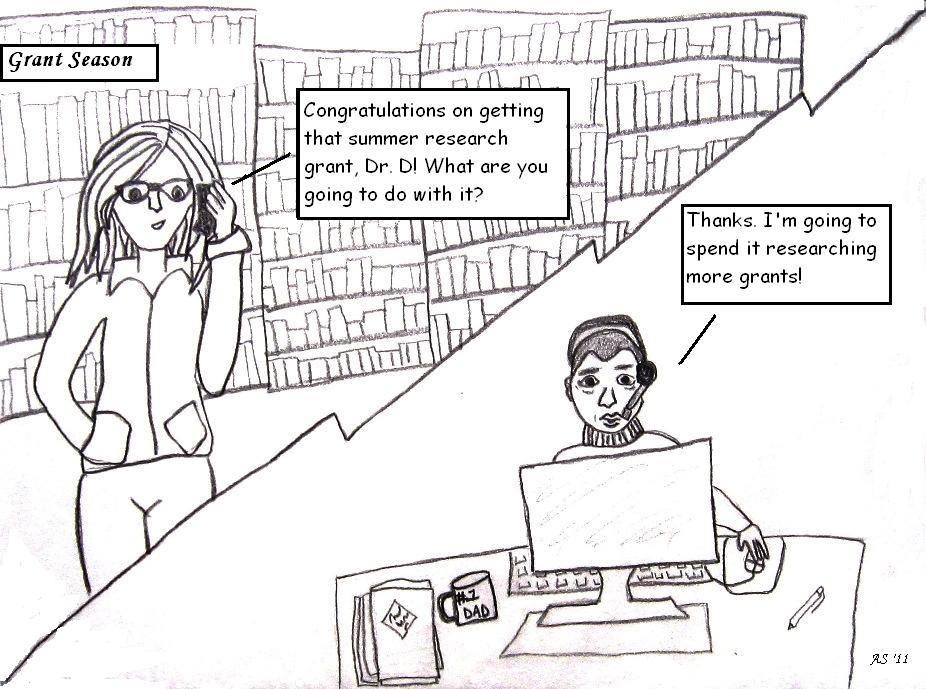
(The first three posts in this series are available at the following links: Part 1, Part 2, and Part 3.) One of the most important parts of completing a book is finding research funding. For historians, there are a number of sources of funding. Unfortunately, I wasn't very successful in obtaining research funding for the Jackson biography. Part … Continue reading The Evolution of a Book, Part 4: Funding Your Research

New Research on the Panic of 1837
While I was in Mississippi honoring John Marszalek recently, Aaron Crawford pointed out a new book on the Panic of 1837 by Alasdair Roberts entitled America's First Great Depression: Economic Crisis and Political Disorder After the Panic of 1837 (Cornell Univ. Press, 2012). It will be interesting to see the perspective that Roberts, a law professor at … Continue reading New Research on the Panic of 1837
The Evolution of a Book, Part 3: The Book Outline
(Part 1 and Part 2 of this series) My students will probably think I'm lying, but I actually didn't like or even follow outlines until I was in grad school. I thought they stifled my creativity and the organic development of my writing. In actuality, I set myself up for failure as a writer, something I learned the … Continue reading The Evolution of a Book, Part 3: The Book Outline

The Evolution of a Book, Part 2: The Book Proposal
(Part 1 of this series is here.) The book proposal that I sent to LSU Press in 2006 was modeled on one that I used for Old Hickory's Nephew [1]. I tweaked the focus of the Jackson proposal based on my experience with LSU Press and advice from the 1st edition of William Germano's book, Getting … Continue reading The Evolution of a Book, Part 2: The Book Proposal
Books for Fall 2012 Semester
It's time to choose books for the Fall 2012 semester. After great thought and deliberation here are my selections: HIS 201 History of the United States I R.B. Bernstein, The Founding Fathers Reconsidered (Oxford Univ. Press, 2011) ISBN 9780199832576 Students responded well to Bernstein's biography of Jefferson, and I'm counting on a similar reaction to this book. … Continue reading Books for Fall 2012 Semester
The Music of the Jesus People: Review of Stowe, No Sympathy for the Devil: Christian Pop Music and the Transformation of American Evangelicalism
I grew up in a faith community that frowned on contemporary music. And by contemporary, I mean anything post-1950. Drums, breathy singing, electric anything--all verboten, although there were inexplicable exceptions for southern gospel music. As a teenager, I rebelled and began listening to forbidden music. One of the artists I discovered and devoured was Keith … Continue reading The Music of the Jesus People: Review of Stowe, No Sympathy for the Devil: Christian Pop Music and the Transformation of American Evangelicalism

Brief Review of Kathryn Olmsted, Real Enemies: Conspiracy Theories and American Democracy, World War I to 9/11
Kathryn Olmsted's Real Enemies is an excellent survey of conspiracy theories in the 20th-century United States. A history professor at UC-Davis, Olmsted makes three arguments. First, the U.S. government perpetrated conspiracies against American citizens in response to alleged anti-government conspiracies. In response, Americans constructed alternative conspiracy theories to explain the conspiracy theories that the government … Continue reading Brief Review of Kathryn Olmsted, Real Enemies: Conspiracy Theories and American Democracy, World War I to 9/11
 Jacksonian America: Society, Personality, and Politics