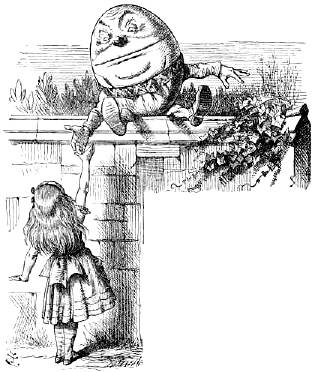
In a an editorial last month, Stanley Kutler criticized American political conservatives for misusing history for their own purposes: Serious history, serious scholarship and serious discussion of facts and ideas are dismissed with tunnel vision. In Lewis Carroll’s “Through the Looking Glass,” Humpty Dumpty scornfully said “when I use a word, it means just what I choose it to … Continue reading Humpty Dumpty History

Upcoming Article in History Compass
The abstract for my forthcoming History Compass article, "Andrew Jackson, Slavery, and Historians," is now available online. The article should be out by the end of February. Historians have neglected to give full consideration to the place of slavery in Andrew Jackson’s private and public life. They rarely move beyond a few well-known examples of Jackson’s treatment … Continue reading Upcoming Article in History Compass
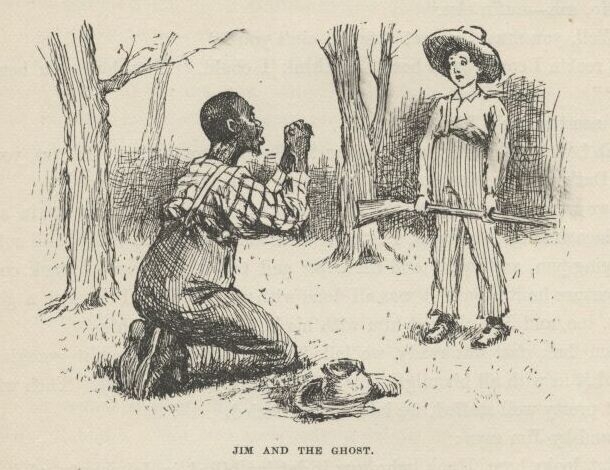
Huck Finn and Censorship
If you've been paying attention, then you know that a censored edition of Mark Twain's The Adventures of Huckleberry Finn is being published. This proposed edition will eliminate the word "nigger," "Injun," and "half-breed," replacing them with "slave," "Indian," and "half-blood." These changes have produced much discussion in the blogosphere, including a thoughtful post by a former student of … Continue reading Huck Finn and Censorship
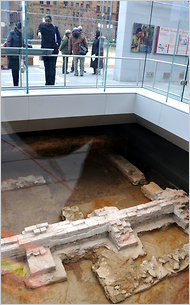
Commemorating Liberty and Slavery in Philadelphia
Yesterday, the New York Times ran reviewed the new exhibit, “The President’s House: Freedom and Slavery in the Making of a New Nation,” which opens today. The exhibit treats the Philadelphia house where George Washington and John Adams lived as presidents during the 1790s. (The U.S. had several capital cities in its early years before … Continue reading Commemorating Liberty and Slavery in Philadelphia

Review of Gene Dattel’s Cotton and Race in the Making of America
Gene Dattel's Cotton and Race in the Making of America: The Human Costs of Economic Power (Ivan R. Dee, 2009) is a book for which I had been looking. While one can find plenty of studies of slavery and the Old South, book-length works focused on cotton's role, specifically its economic influence, in shaping the … Continue reading Review of Gene Dattel’s Cotton and Race in the Making of America
Is Slavery Too Offensive to Discuss?
News came out this week that a reading about slavery by a fifth-grade teacher has produced a lawsuit by a female student's family. According to media reports and the suit, the excerpt from Julius Lester's book, From Slaveship to Freedom Road, contained "racial epithets and racist characterizations" that "affected the conditions of learning duties and … Continue reading Is Slavery Too Offensive to Discuss?

Review of Lacy K. Ford, Deliver Us from Evil: The Slavery Question in the Old South
Lacy K. Ford's Deliver Us from Evil: The Slavery Question in the Old South (Oxford Univ. Press, 2009) is a magnificent survey of the Jacksonian South's struggle to reconcile itself with slavery. Actually, according to Ford, it was the Jacksonian Souths' (Upper and Lower) struggle to reconcile themselves to slavery, as circumstances in the Early … Continue reading Review of Lacy K. Ford, Deliver Us from Evil: The Slavery Question in the Old South
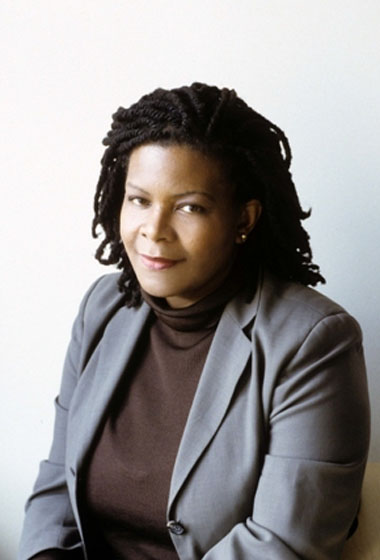
Annette Gordon-Reed and the Jefferson-Hemings Relationship
Early Republic historian Annette Gordon-Reed was recently named a MacArthur Fellow, which awards $500,000 over five years for the pursuit of creative endeavors, no strings attached. Gordon-Reed, of course, is familiar to Early Republic historians and the general public for her work on the Thomas Jefferson-Sally Hemings relationship and the Hemings family, discussed in a Gilder … Continue reading Annette Gordon-Reed and the Jefferson-Hemings Relationship
John Spencer Bassett and Jacksonian Historiography, Part 2
(Part 1 of this series is here.) While Bassett certainly attempted to provide a representative cross-section of Jackson's correspondence, several limitations deserve recognition. First, the Bassett volumes were edited and published during a time when certain topics were given more weight than others. For example, political and military matters dominate the CAJ volumes. Kinship, gender, and race are … Continue reading John Spencer Bassett and Jacksonian Historiography, Part 2
John Spencer Bassett and Jacksonian Historiography, Part 1
In the process of presenting a paper at the April 2010 OAH about Jackson and slavery and writing a longer historiographical essay on the same topic, I have spent a lot of time this year considering the influence of John Spencer Bassett on Jacksonian historiography. Bassett received his Ph.D. from Johns Hopkins University in 1894, having … Continue reading John Spencer Bassett and Jacksonian Historiography, Part 1
 Jacksonian America: Society, Personality, and Politics